

Pure & Unrefined: The Essential Guide to Organic Virgin Hemp Seed Oil
Updated: June 2026 · Read time: ~6 min · Category: Nutrition & Supplements
When searching for the purest supplement, Organic Virgin Hemp Seed Oil stands out as the ultimate unrefined superfood. Unlike mass-produced alternatives, this emerald-green elixir retains its bio-active compounds — including rare antioxidants, chlorophyll pigments, and a near-perfect Omega ratio — exactly because of how it is made: cold-pressed once, never refined.
What Exactly is “Virgin” Hemp Seed Oil? (The First-Press Advantage)
The word “virgin” is borrowed from olive oil terminology — and it means exactly the same thing here: oil extracted from the first mechanical pressing of the seed, using no heat above 49°C (120°F) and zero chemical solvents. Pressed once. Lightly filtered. Bottled.
Most commodity hemp oils on store shelves have been through industrial refining — a multi-step process involving bleaching, deodorizing, and high-heat degumming. The result is a pale yellow, odorless oil that is nutritionally gutted. Convenient, shelf-stable, and largely stripped of the compounds you are actually paying for.
Virgin hemp seed oil skips all of that. The tradeoff is a shorter shelf life and a distinctive nutty, grassy aroma — both signs you have something real.
👉 Read more about Cold-Pressed extraction processes
Virgin vs. Refined: Why Color and Scent Matter for Your Health
If you hold a bottle of genuine virgin hemp seed oil to the light, it should be a deep, vibrant chlorophyll green. Not pale yellow. Not clear. That color is biochemistry, not branding — chlorophyll, carotenoids, and polyphenols are co-extracted with the oil during cold pressing and are directly responsible for a significant portion of its antioxidant activity.
| Property | Virgin (Cold-Pressed) | Refined |
|---|---|---|
| Color | ✅ Deep emerald green | ❌ Pale yellow / clear |
| Aroma | ✅ Nutty, grassy, earthy | ❌ Odorless (deodorized) |
| Chlorophyll | ✅ Present | ❌ Removed |
| Polyphenols | ✅ Retained | ❌ Eliminated in neutralization |
| Vitamin E (Tocopherols) | ✅ Full spectrum preserved | ❌ Significantly reduced |
| Processing temperature | ✅ Below 49°C | ❌ Often 100–220°C |
| Chemical solvents | ✅ None | ❌ Hexane commonly used |
The scent matters too. A genuine nutty aroma is your sensory confirmation of volatile compounds — terpenes, minor phenolic acids, and GLA precursors — that survive only in unrefined oil.
The 2026 Nutritional Breakdown: Omega-3, 6, and Rare Antioxidants
Hemp seed oil’s nutrition profile is legitimately distinctive. It is not just about omega fatty acids — it is about the ratio and the surrounding micronutrient matrix that exists only in the unrefined version.
Key nutrients preserved in virgin cold-pressed hemp seed oil:
- 3:1 Omega-6 to Omega-3 ratio — close to the intake balance many researchers consider ideal for healthy inflammatory response
- ~80% polyunsaturated fats — dominated by linoleic acid (LA) and alpha-linolenic acid (ALA)
- Gamma-Linolenic Acid (GLA) — a rare Omega-6 variant found in very few plant oils; a metabolic precursor involved in inflammatory regulation; present only in unrefined oil
- Full-spectrum Tocopherols (Vitamin E) — α-, β-, γ-, and δ-tocopherol all preserved by sub-50°C pressing
- Chlorophyll pigments — natural antioxidant, co-extracted only in virgin oils
- Beta-Sitosterol — a phytosterol with documented antiradical activity in cold-pressed, Omega-3-rich oils
📚 Research note: A study by Yu, Zhou & Parry published in Food Chemistry specifically characterized the antioxidant properties of cold-pressed hemp seed oil, confirming meaningful radical-scavenging capacity. A broader multi-oil review (Foods, Grajzer et al., 2020) found that polyphenols are completely eliminated during the neutralization stage of chemical refining — meaning they survive only in virgin, cold-pressed products. Tocopherol content was identified as the strongest individual driver of antioxidant capacity, with phytosterols adding a synergistic effect. Sources: Yu LL et al., Food Chemistry (2005); Grajzer M et al., Foods (2020)
GLA deserves its own mention. It appears in only a handful of plant oils — borage, evening primrose, and hemp are the main sources. Refined hemp oil typically shows dramatically reduced or absent GLA because it degrades at processing temperatures. In virgin hemp seed oil, it survives intact.
How to Use Organic Virgin Hemp Seed Oil in Your Daily Routine
The most important rule: never cook with virgin hemp seed oil. Its high PUFA content makes it thermally unstable. Heat destroys the very compounds you are paying a premium for. Use it as a finisher, a supplement, or a topical — never in the pan.
Practical ways to use it daily:
- 🥗 Cold dressing — Drizzle over salads, grain bowls, or roasted vegetables after cooking. 1–2 tablespoons per serving
- 🥤 Smoothies & shakes — Blend directly into morning smoothies or protein shakes; the nutty aroma pairs well with banana or cacao
- 🍞 Bread & dips — Use as a finishing oil for sourdough or alongside hummus and balsamic
- 💊 Direct supplement — Take 1 tablespoon (15ml) straight with a meal. The earthy flavor is mild and manageable
- 🧴 Skin & hair — Apply topically as a moisturizer or scalp treatment; the Omega-6 profile supports skin barrier function
Storage: Refrigerate after opening. Consume within 8–12 weeks. The dark green color fading toward yellow is your natural freshness indicator — oxidation is progressing, and it is time for a new bottle.
👉 Shop our Organic Virgin Hemp Seed Oil
Why Traceability and “Made in USA” Are Non-Negotiable
Hemp is a bioaccumulator — it pulls compounds from the soil it grows in, including heavy metals, pesticides, and industrial contaminants. “Organic Certified” matters here more than with most oils. But certification alone is insufficient if you cannot trace the oil from seed to shelf.
Contract-processed imported oils can pass through multiple intermediaries before reaching a bottler. Each step introduces opportunities for adulteration, mislabeling, or nutrient degradation from improper transit temperatures.
What genuine traceability looks like — the non-negotiable checklist:
- ✅ USDA Organic Certification — prohibits synthetic pesticides and herbicides at the farm level
- ✅ Single-origin farm sourcing — specific farm, state, and harvest season — not an anonymous blend
- ✅ In-house cold-press extraction on US soil — falls under FDA facility standards; imported extracted oil may not
- ✅ Third-party lab testing with published COA — tests for heavy metals, microbials, and potency; available on request or publicly posted
- ✅ Batch-numbered, dark-glass bottling — amber or dark glass prevents light degradation; batch numbers enable quality tracking
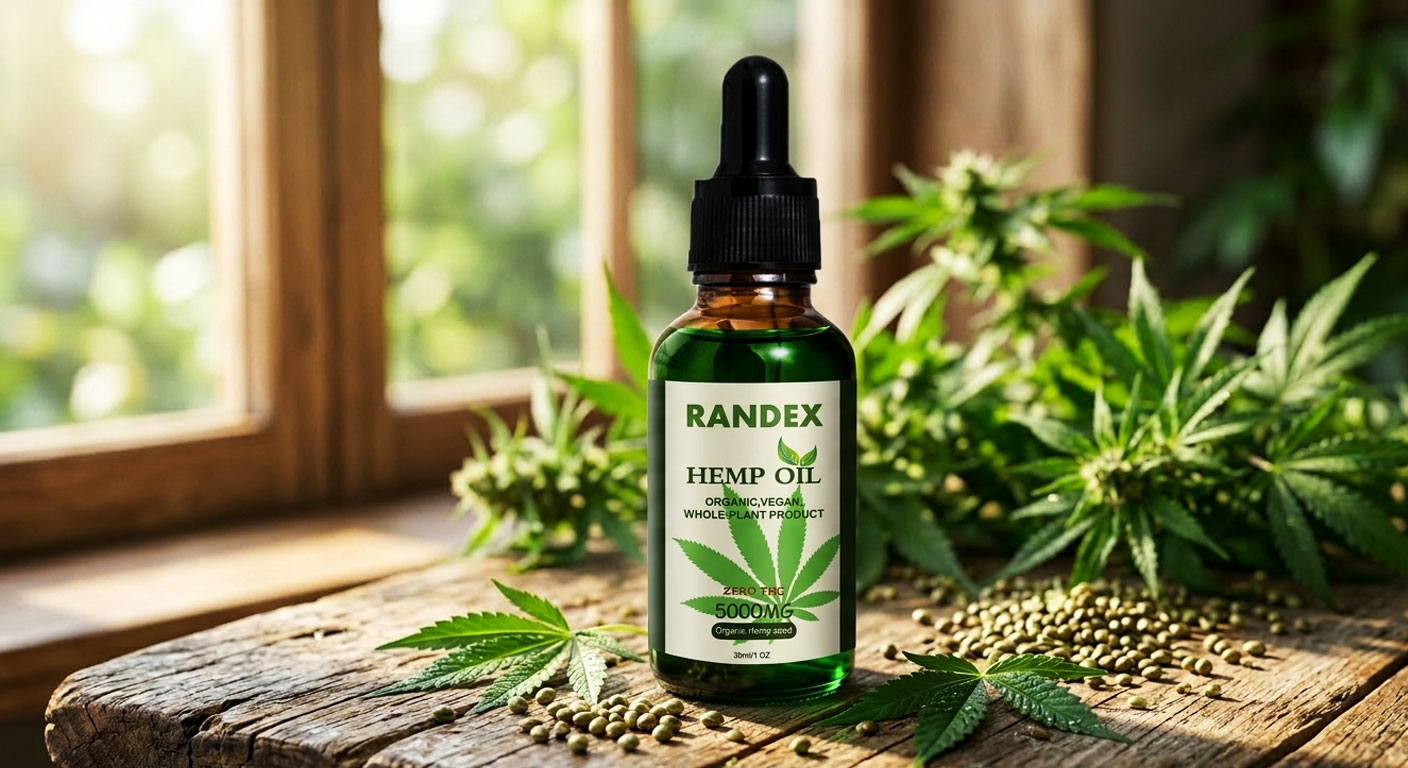
At Randex Health, every bottle of Organic Virgin Hemp Seed Oil carries a batch number tied to a specific farm source and extraction date. We publish COAs. We cold-press on US soil. These are not marketing claims — they are operational commitments we stand behind.
Questions About Our Extraction Process?
Our wellness experts are here to help. Reach out anytime — or follow us for ongoing traceability updates, batch releases, and formulation news.
Contact Randex Health · Follow us for more traceability updates