


The wellness market feels a bit like the wild west these days, doesn’t it? Every other scroll on social media brings up a new “miracle” product, especially when it comes to anything derived from hemp. It’s easy to get lost in the noise, wondering what’s genuine and what’s just clever marketing. For many, the term “hemp” itself conjures up a confusing mix of ideas, from CBD to something entirely different.
Here’s the thing: understanding true organic hemp seeds oil can cut through that confusion. It’s a nutritional powerhouse, distinct from other hemp products, and it offers some pretty compelling benefits for your overall well-being. This isn’t about chasing a fleeting trend; it’s about a time-tested natural ingredient.
My goal here is to empower you. By the time you finish reading, you’ll be equipped to differentiate the real deal from the imposters, understand exactly what you’re putting into (or onto) your body, and make informed choices about quality and purity. Many businesses, like the one struggling to make their natural topical pain relief stand out, often find themselves battling a perception problem. They ask, “How do I make our efficacy claims believable without sounding like snake oil?” The answer starts with clarity and transparency about ingredients like organic hemp seeds oil. This article lays that foundation, helping you articulate the distinct, science-backed benefits of this incredible oil.
What is Organic Hemp Seeds Oil? (And What It’s Not)
Let’s start with the basics. Simply put, organic hemp seeds oil is derived from the seeds of the Cannabis sativa plant. But before you jump to any conclusions, let me be clear: this isn’t the part of the plant that gets you “high.” Not even close.
The oil is extracted through a process called cold-pressing, which is a big deal, and we’ll talk more about that in a moment. What you get from these tiny seeds is a remarkably rich, green-golden oil packed with nutritional goodness. Think of it as a superfood oil, not a recreational substance.
So, what’s inside? A treasure trove of beneficial components, primarily omega-3 and omega-6 fatty acids in an optimal ratio. These aren’t just any fats; they’re essential fatty acids, meaning your body can’t produce them on its own. You have to get them from your diet. Beyond that, organic hemp seeds oil also delivers a healthy dose of vitamins (like Vitamin E) and minerals (such as phosphorus, potassium, sodium, magnesium, sulfur, calcium, iron, and zinc). It’s a pretty impressive nutritional profile, actually.
Now, for the crucial distinction: organic hemp seeds oil contains negligible to zero cannabinoids. This means little to no CBD (cannabidiol) and definitely no THC (tetrahydrocannabinol), the compound responsible for psychoactive effects. If a product claims to be hemp seed oil but also boasts high CBD content, something isn’t quite right. They are distinct products, derived from different parts of the plant and offering different benefits. It’s a common point of confusion, and frankly, some brands intentionally muddy the waters.
Which brings us to the “cold-pressed” difference. This extraction method involves mechanically pressing the seeds at low temperatures. Why is this superior? Because high heat or chemical solvents can degrade the delicate fatty acids, vitamins, and other beneficial compounds in the oil. Cold-pressing ensures that the organic hemp seeds oil retains its full nutritional integrity, preserving all those good-for-you elements in their most potent form. It’s a gentler, more natural approach, and it truly makes a difference in the quality of the final product.
Research consistently highlights the nutritional benefits of hemp seed oil, particularly its fatty acid composition. For example, a study published in Molecules underscored its potential as a source of essential polyunsaturated fatty acids and other bioactive compounds that support health. (https://www.ncbi.nlm.nih.gov/pmc/articles/PMC7733508/)
Why “Organic” Matters: Beyond the Label for Organic Hemp Seeds Oil
When you see “organic” on a label, it’s easy to dismiss it as just another marketing buzzword or something that simply costs more. But when it comes to something you’re consuming or applying to your skin, especially an oil that’s a direct extract from a plant, “organic” isn’t just a nicety. It’s a non-negotiable for purity and safety.
Consider conventional farming practices. Hemp, like any other crop, can be exposed to pesticides, herbicides, and synthetic fertilizers. These chemicals are designed to kill pests or boost growth, but they don’t just disappear. They can linger in the soil, be absorbed by the plant, and ultimately end up in the final product – your organic hemp seeds oil. Moreover, conventional farming practices can contribute to soil degradation and water pollution, impacting the environment.
That’s the catch. When you choose certified organic organic hemp seeds oil, you’re opting for a product grown without these harmful synthetic chemicals. This means a cleaner product for you, free from unwanted residues. But it’s more than just avoiding the bad stuff. Organic certification also signifies a commitment to environmental sustainability. It often involves practices that promote soil health, biodiversity, and responsible water management. It’s a win-win for both your body and the planet.
Understanding these third-party organic certifications, like the USDA Organic seal, is key. These aren’t self-declarations; they involve rigorous standards and regular audits by independent bodies. They signify that the entire process, from seed planting to harvesting and processing, adheres to strict organic guidelines. It’s a promise of purity and a commitment to a higher standard.
One business owner shared a common pain point: “Sourcing truly organic hemp oil that’s also sustainably produced and affordable for my small business is a huge headache.” This highlights the real-world challenge. While the upfront cost of certified organic hemp seeds oil might be slightly higher, the value it brings in terms of purity, consumer trust, and environmental responsibility often justifies that investment. It’s about building a brand that stands for genuine quality, not cutting corners.
Decoding Quality: What to Look for in Organic Hemp Seeds Oil
Okay, so you understand what organic hemp seeds oil is and why organic matters. Now, how do you actually pick out a high-quality product from the array of options out there? It’s not as simple as grabbing the first bottle you see. There are specific indicators that separate the best from the rest.
First on the list, and perhaps the most indispensable tool for any discerning buyer, is the Certificate of Analysis (COA). If a brand doesn’t offer one, walk away. Seriously. A COA is a third-party lab report that verifies the product’s contents and purity. It should confirm things like:
* Cannabinoid profile: Showing negligible or zero THC and CBD, as expected for true hemp seed oil.
* Purity: Absence of heavy metals, pesticides, herbicides, mold, and other contaminants.
* Nutritional profile: Sometimes, it will even detail the omega fatty acid content.
You should be able to easily find the COA on the brand’s website, usually linked directly from the product page, or by scanning a QR code on the packaging. If you have to dig for it, that’s a red flag.
Next, transparency from seed to bottle. This isn’t just a catchy phrase; it’s a commitment. A reputable brand will be open about where their hemp is grown, their farming practices, and their processing methods. Knowing the source ensures accountability and allows you to trace the product’s journey. For instance, Randex Health prides itself on this kind of transparency, detailing its commitment to quality from seed to bottle. You can learn more about their approach on their About Randex page.
We touched on extraction methods earlier, but it’s worth reiterating: always look for cold-pressed organic hemp seeds oil. This method, as discussed, preserves the delicate nutritional compounds. Avoid anything that mentions chemical solvents or high heat, as these can degrade the oil’s quality and potentially leave unwanted residues. Curious about the specifics? Randex Health offers a detailed explanation of Cold-Pressed vs CO2 Extraction, which can help clarify the benefits.
Finally, consider packaging and storage. Light and heat are the enemies of delicate oils like organic hemp seeds oil. High-quality oil should come in a dark, opaque bottle (often amber or dark green glass) to protect it from UV light. Once opened, it’s best stored in a cool, dark place, or even refrigerated, to maintain its potency and prevent oxidation. If you see it on a brightly lit shelf in a clear bottle, that’s a sign the brand might not fully understand or prioritize preservation.
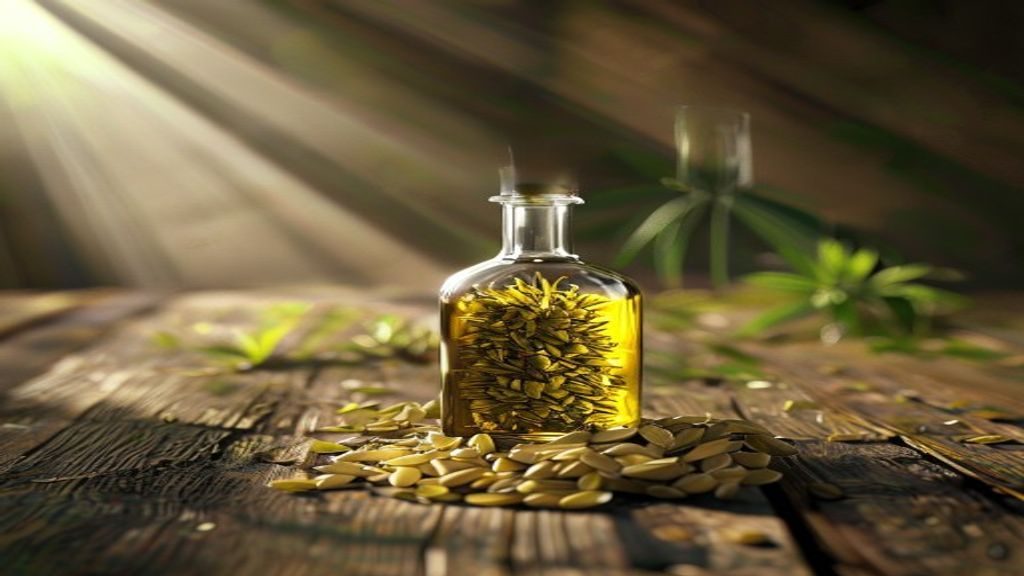
(Featured image alt text hint: Organic hemp seeds oil in a bottle with hemp leaves on a wooden background.)
Organic Hemp Seeds Oil vs. CBD Oil: A Clear Comparison
This is where a lot of people get tripped up. The terms “hemp oil” and “CBD oil” are often used interchangeably, but they are absolutely not the same thing. Understanding the distinction is vital, especially given the differing legal and marketing landscapes for each. Let’s break it down definitively.
| Feature | Organic Hemp Seeds Oil | CBD Oil (from hemp) |
|---|---|---|
| Source | Seeds of Cannabis sativa | Flowers, leaves, and stalks of Cannabis sativa |
| Cannabinoids | Negligible to zero CBD/THC | Rich in CBD, trace THC (under 0.3%) |
| Primary Benefits | Nutritional support, Omega fatty acids, skin health | Endocannabinoid system support, stress, discomfort relief |
| Extraction Method | Cold-pressed | CO2 extraction, ethanol extraction |
| Legal Status | Widely legal, food product | Federally legal (under 0.3% THC), but state laws vary |
| Cost | Generally more affordable | Generally more expensive |
As you can see, the differences are pretty stark. Organic hemp seeds oil is primarily a nutritional supplement, valued for its fatty acid profile. CBD oil, on the other hand, is sought after for its interaction with the body’s endocannabinoid system, which can influence things like mood, pain perception, and sleep.
This distinction isn’t just academic. For businesses, navigating the regulatory environment for “hemp” products is a minefield. The pain point, “Selling organic hemp oil is a minefield with all the advertising restrictions and payment processing issues; it feels like I’m constantly fighting an uphill battle just to get my product seen,” perfectly illustrates this. By clearly understanding that organic hemp seeds oil is a food product with a different regulatory path than CBD oil, brands can better tailor their marketing and ensure compliance. This clarity is also crucial for consumers, so they know exactly what kind of product they are buying and what benefits to expect.
Consumer Reports has an excellent comparison that further elaborates on these differences, which I highly recommend. (https://www.consumerreports.org/health/cbd-oil-vs-hemp-seed-oil-what-to-know-a7199997412/) If you want to dive deeper into the nuances, Randex Health also provides a comprehensive guide: Is Hemp Oil the Same as CBD Oil?.
The Wellness Benefits of Pure Organic Hemp Seeds Oil
So, we’ve established what organic hemp seeds oil is and how to spot the good stuff. Now, let’s talk about why you’d want to incorporate it into your life. The benefits are primarily nutritional and focus on supporting overall wellness, not treating specific medical conditions. Remember, this isn’t a “miracle cure,” but a powerful natural supplement that contributes to a healthy body.
The star players here are the omega-3 and omega-6 fatty acids. Hemp seed oil offers these essential fats in an optimal ratio, typically around 3:1 (omega-6 to omega-3). This balance is incredibly important for supporting a healthy inflammatory response in the body. Many modern diets are skewed heavily towards omega-6s, which can lead to an imbalance. Introducing a source like organic hemp seeds oil helps bring things back into equilibrium, which in turn supports cardiovascular health, brain function, and even joint comfort.
Beyond internal benefits, organic hemp seeds oil is fantastic for skin and hair health. Applied topically, its rich fatty acid profile can deeply moisturize and nourish the skin without clogging pores. It can help soothe dryness, reduce redness, and support the skin’s natural barrier function. Many people find it effective for maintaining a healthy complexion and even for managing conditions like eczema or psoriasis. For hair, it can add shine, strengthen strands, and promote scalp health. It’s a versatile natural moisturizer, honestly.
And yet, the benefits don’t stop there. This oil is also a natural source of essential vitamins and minerals. We’re talking about Vitamin E, a potent antioxidant that helps protect cells from damage, along with minerals like phosphorus, potassium, magnesium, and zinc. These all play various roles in supporting everything from bone health to immune function, contributing to your overall vitality. It’s like a little multi-vitamin in liquid form, but entirely natural.
I often hear statements like, “I need natural pain relief for muscle pain that actually works fast and lasts, not just something that gives a mild, temporary tingle.” It’s true that organic hemp seeds oil isn’t a fast-acting pain reliever in the way a topical cream might be. However, its nutritional profile does support overall bodily functions that contribute to well-being and resilience. By helping to maintain a healthy inflammatory balance and providing essential nutrients, it creates a foundation for your body to function optimally, which can indirectly support comfort and recovery over time. It’s a long game, but a worthwhile one.
Mid-Article CTA: Ready to experience the difference of truly pure organic hemp seeds oil? Explore Randex Health’s COA-tested products today and nourish your body naturally. You can find their premium products, including their Organic Hemp Oil 6000MG Gummies, on their Products page.
How to Incorporate Organic Hemp Seeds Oil into Your Daily Routine
Now that you’re convinced of the benefits, how do you actually use this stuff? It’s surprisingly versatile, fitting seamlessly into both your kitchen and your self-care routine.
For culinary uses, think cold. Organic hemp seeds oil has a delicate, nutty flavor that’s reminiscent of sunflower seeds or walnuts. It’s fantastic in salad dressings, offering a richer, healthier alternative to standard oils. Try whisking it into a vinaigrette with apple cider vinegar, Dijon mustard, and a touch of maple syrup. It also blends beautifully into smoothies, adding a nutritional boost without overpowering other flavors. You can drizzle it over roasted vegetables after they come out of the oven, or stir it into dips like hummus. Just remember: avoid high heat. Cooking with hemp seed oil at high temperatures can destroy its beneficial omega fatty acids and alter its flavor.
Topical applications are another excellent way to utilize organic hemp seeds oil. You can apply it directly to your skin as a moisturizer, especially if you have dry patches or want to give your skin a healthy glow. It absorbs well and doesn’t leave a greasy residue, unlike some other oils. Many people use it as a massage oil, either on its own or blended with essential oils for added aromatherapy benefits. It’s also a great addition to DIY skin and hair masks. For instance, a few drops mixed into your conditioner can do wonders for dry hair.
When it comes to dosage, especially for internal use, it’s always smart to start low and gradually increase. Most recommendations suggest beginning with about 1-2 teaspoons per day and seeing how your body responds. You can then slowly increase it to 1-2 tablespoons daily, depending on your individual needs and how you feel. Listen to your body; it usually tells you what it needs.
Finally, let’s talk storage tips to keep your organic hemp seeds oil fresh and potent. As mentioned, light and heat are its enemies. Always store your bottle in a cool, dark place, away from direct sunlight and heat sources like your stove. Refrigeration is often recommended, especially after opening, as it significantly extends the shelf life and preserves those delicate fatty acids. If your oil starts to smell rancid or develops an off-flavor, it’s time to replace it.
The challenge of formulating natural topical products, like a natural pain relief cream for arthritis that’s effective yet pleasant to use, is real. The quote, “It’s hard to formulate a natural pain relief cream for arthritis that has a pleasant scent and texture while still being effective and non-greasy,” speaks to this. While this article focuses on the oil itself, understanding the properties of organic hemp seeds oil – its non-greasy texture and skin-nourishing qualities – can absolutely inform its use in broader wellness routines, including as a base or an active ingredient in topical preparations. Randex Health’s Organic Hemp Cream 30000MG is a great example of a product that balances efficacy with user experience.
Conclusion: Your Path to Informed Hemp Wellness
Navigating the world of natural wellness can feel overwhelming, especially with so many products vying for your attention. But when it comes to organic hemp seeds oil, the path to informed choices is clear. We’ve peeled back the layers, understanding precisely what this nutritious oil is (and what it isn’t), why opting for organic is a smart move, and how to spot a truly high-quality product using tools like the COA. We’ve also drawn a firm line between hemp seed oil and CBD oil, clearing up common misconceptions.
Ultimately, choosing organic hemp seeds oil is about making a conscious decision to nourish your body with a pure, natural ingredient. It’s about supporting your wellness journey with essential fatty acids, vitamins, and minerals, all while benefiting from a product that’s been carefully sourced and processed. It’s about transparency and trust.
At Randex Health, that commitment to transparency, purity, and natural wellness isn’t just a slogan; it’s the foundation of everything they do. They believe you deserve to know exactly what you’re putting into your body, and they stand by the quality of their cold-pressed, COA-tested organic hemp seeds oil.
Empower yourself with knowledge. Choose wisely. Choose Randex Health for your organic hemp seeds oil needs, and take a confident step towards a naturally supported, vibrant you.
FAQ
Q1: Is organic hemp seeds oil the same as CBD oil?
A: No, organic hemp seeds oil is pressed from the seeds of the hemp plant and primarily contains omega fatty acids, vitamins, and minerals, with negligible to zero cannabinoids like CBD or THC. CBD oil, on the other hand, is extracted from the flowers, leaves, and stalks of the hemp plant and is rich in cannabinoids. They offer different benefits.
Q2: Does organic hemp seeds oil contain THC?
A: High-quality organic hemp seeds oil contains negligible to zero THC. It is not psychoactive and will not produce a “high.” Reputable brands provide third-party lab reports (COAs) to verify THC levels, ensuring purity and safety.
Q3: How can I verify the quality of organic hemp seeds oil?
A: Look for several key indicators: third-party organic certification (like USDA Organic), cold-pressed extraction methods, and a Certificate of Analysis (COA) from an independent lab. The COA should confirm purity, absence of contaminants, and the nutritional profile of the organic hemp seeds oil.
Q4: What are the main benefits of consuming organic hemp seeds oil?
A: Organic hemp seeds oil is a rich source of essential omega-3 and omega-6 fatty acids in an optimal ratio, which support cardiovascular health, brain function, and skin vitality. It also contains vitamins (like Vitamin E) and minerals that contribute to overall wellness and a healthy inflammatory response.
Q5: Can I use organic hemp seeds oil for my pets?
A: Many pet owners use organic hemp seeds oil as a nutritional supplement for their animals, often for coat health, joint support, and general well-being. However, always consult with your veterinarian before introducing any new supplement to your pet’s diet to ensure it’s appropriate for their specific needs.
Sources to cite
- https://www.ncbi.nlm.nih.gov/pmc/articles/PMC7733508/ – Research on hemp seed oil’s nutritional benefits
- https://www.fda.gov/news-events/public-health-focus/fda-regulation-cannabis-and-cannabis-derived-products-including-cbd – FDA’s stance on hemp-derived products
- https://www.usda.gov/topics/organic – USDA organic certification guidelines
- https://www.who.int/news-room/q-a-detail/cannabidiol-(cbd)-critical-review-report – WHO’s review of cannabidiol
- https://www.healthline.com/nutrition/hemp-seed-oil-benefits – Healthline’s guide to hemp seed oil advantages
- https://www.webmd.com/diet/health-benefits-hemp-seed-oil – WebMD’s overview of hemp seed oil
- https://www.consumerreports.org/health/cbd-oil-vs-hemp-seed-oil-what-to-know-a7199997412/ – Consumer Reports’ comparison of hemp and CBD oils
- https://www.randexhealth.com/is-hemp-oil-the-same-as-cbd-oil-understanding-the-differences/ – Randex Health’s guide to distinguishing hemp oil from CBD oil
- https://www.randexhealth.com/hemp-oil-extraction-cold-pressed-vs-co2-extraction/ – Randex Health’s insights on cold-pressed hemp extraction
- https://www.randexhealth.com/products/ – Randex Health’s product hub
- https://www.randexhealth.com/product/randex-organic-hemp-cream-30000mg/ – Randex Health’s Organic Hemp Cream 30000MG
- https://www.randexhealth.com/product/hemp-oil-6000mg-gummies/ – Randex Health’s Organic Hemp Oil 6000MG Gummies
- https://www.randexhealth.com/about-randex/ – About Randex Health
- https://www.randexhealth.com/about-us/our-transparency/ – Randex Health’s commitment to transparency
Written by Kelly, randexhealth.com Founder.